

Making the switch to an electric car is easier than ever, but if you are new to EV ownership, charging can still feel like one of the biggest unknowns.
You may have plenty of questions. How often should you charge? Should you always charge to 100%? Is home charging the most cost-effective option? And what happens when you need to travel further afield?
The good news is that charging an electric car is far simpler than many people expect.
Once you understand the different charging options, when to plug in, and how to get the most from your battery, it quickly becomes part of your everyday routine.
Whether you have recently made the switch or are considering your first electric car, these ten practical EV charging tips will help you charge with confidence and get the most from your electric driving experience.
1. Charge little and often

You do not need to wait until your electric vehicle's battery is almost empty before plugging it in.
For many drivers, it makes more sense to top up the battery whenever it is convenient rather than treating charging like a trip to the petrol station.
If you have a charger at home, that might mean plugging in overnight a few times a week. If you regularly charge at work, you may simply top up while your vehicle is parked during the day.
Think of it more like charging your phone. You do not wait until the battery reaches 1% before reaching for the charger, and the same principle often applies to electric vehicles.
Charging little and often can also help ensure you are always ready for unexpected journeys, without having to worry about whether you have enough range.
Regular top-ups may be particularly useful if you:
- Have access to a home charger
- Make lots of shorter journeys
- Commute regularly
- Have workplace charging available
- Want to avoid worrying about your remaining range
Ultimately, the best charging routine is the one that fits around your lifestyle and driving habits.
2. Take advantage of cheaper off-peak electricity
If you can charge your electric car at home, when you charge can make a significant difference to how much you pay.
Many energy suppliers now offer EV-specific or time-of-use tariffs, with cheaper electricity rates available during certain hours, often overnight.
This means that instead of charging as soon as you arrive home, you can schedule your electric vehicle or home charger to start charging when electricity is at its lowest cost.
For most drivers, there is very little effort involved. Simply plug your vehicle in when you get home and let the charging schedule do the rest. You can learn more about charging costs and EV tariffs in our Guide to going electric blog.
Before choosing an EV electricity tariff, consider:
- The off-peak electricity rate
- How many hours the cheaper rate is available
- Your typical weekly mileage
- Whether the daytime electricity rate is higher
- How much electricity the rest of your household uses
Charging at home is typically the most cost-effective way to charge an electric car, and taking advantage of cheaper off-peak electricity can help reduce running costs even further.
3. Understand the different EV charging speeds
Not all electric car chargers operate at the same speed, and the fastest option is not always the right one for every situation.
For example, if your vehicle is parked on your driveway overnight, there is usually little need for ultra-rapid charging. However, if you are stopping during a longer motorway journey, faster charging can help get you back on the road sooner.
Public EV chargers in the UK are generally divided into four power bands:
| Charger type | Power | Typically, useful for |
| Standard | 3kW–7.9kW | Overnight charging at home and longer-stay locations |
| Standard Plus | 8kW–49kW | Workplaces, hotels, car parks, and leisure destinations |
| Rapid | 50kW–149kW | Faster charging during longer journeys |
| Ultra-rapid | 150kW+ | Quick top-ups at motorway services and charging hubs |
Charging speed is measured in kilowatts (kW). In simple terms, the higher the kW rating, the faster a charger can deliver energy to your battery.
However, it is important to remember that every electric vehicle has its own maximum charging capability.
For example, if your EV can accept a maximum charging rate of 100kW, connecting it to a 300kW ultra-rapid charger will not increase the speed beyond what the vehicle is designed to accept. The charger can only deliver power up to the car's maximum charging rate.
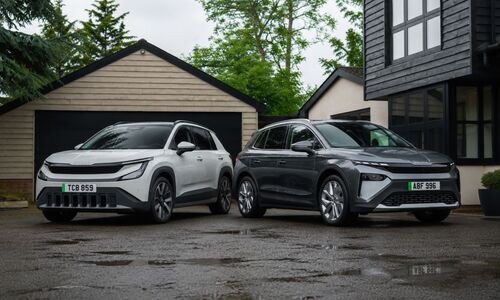
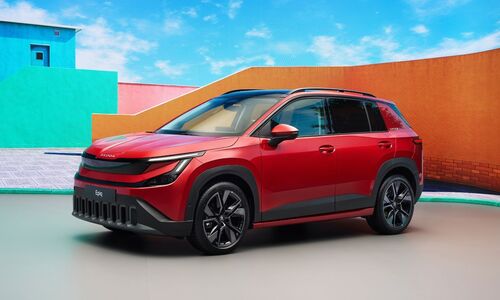
You can see this across the Škoda electric range. The Škoda Epiq 55 can charge at up to 105kW, while the Elroq 85 and Enyaq 85 can accept up to 165kW. Even when connected to a higher-powered ultra-rapid charger, these vehicles will only draw the maximum power they are designed to receive.
Understanding your vehicle's charging capability can help you choose the most suitable charger, minimise charging times, and plan longer journeys more effectively.
4. Plan ahead for longer journeys

One of the biggest concerns for drivers considering an electric car is what happens when they need to travel further afield.
The answer is often quite simple: plan your charging stops in the same way you might plan a coffee break, lunch stop, or comfort break during a longer journey.
Many modern EVs feature built-in route planning that can recommend suitable charging stops based on your destination, battery level, and anticipated range. Charging apps can also help you locate nearby chargers, check availability, and view payment options before you arrive.
Before setting off on a longer electric vehicle journey, it can be helpful to:
- Check where rapid and ultra-rapid chargers are located
- Review your expected remaining range
- Plan charging stops around natural breaks in your journey
- Have an alternative charging location in mind as a backup
- Check whether a charging app, account, or specific payment method is required
As of August 2026, according to ZapMap , there were 123,677 EV charging connectors across 96,708 devices at 47,810 locations throughout the UK, supporting on-street, destination and en-route charging.
With a little planning before you set off, longer electric car journeys can be straightforward, convenient, and stress-free.
5. There’s no need to charge to 100%

Seeing 100% on your battery can be reassuring, but for everyday driving, a full charge is not always necessary.
Most electric vehicles use lithium-ion batteries, and for many models, keeping the battery within a moderate charge range can help support long-term battery health.
This is why you may hear owners refer to the 20% to 80% rule.
In simple terms, it means allowing the battery to stay roughly between 20% and 80% charge during normal day-to-day use, rather than regularly running it very low or keeping it fully charged for extended periods.
That said, every electric car is different, so you should always follow the charging recommendations provided by your vehicle manufacturer.
There is also nothing wrong with charging to 100% when you need the additional range.
Charging to 100% may make sense when:
- You are heading on a longer journey
- You know you will not be able to charge for an extended period
- Your vehicle manufacturer recommends a different charging routine
Many electric cars allow you to set a charging limit through the vehicle's infotainment system or companion app. This means you can automatically stop charging at your preferred battery level without needing to unplug the vehicle manually.
By understanding how your battery works and choosing a charging routine that suits your driving habits, you can enjoy the convenience of electric motoring while helping to maintain battery performance over the long term.
6. Make use of pre-conditioning in winter

Cold weather can affect more than just your comfort behind the wheel. Lower temperatures may also impact an electric vehicle's efficiency and available range.
That is where pre-conditioning can help.
If your electric car supports it, pre-conditioning allows you to warm or cool the cabin before setting off. Depending on the model, it may also prepare the battery for driving or charging in colder conditions.
The real benefit comes when the vehicle is still plugged in.
Rather than using battery energy to warm the cabin once you are on the road, the vehicle can draw power from the mains supply while charging. This can help preserve battery energy for driving and improve comfort from the moment you set off.
Pre-conditioning can help you:
- Start your journey with a warm cabin
- Clear or defrost the windows before setting off
- Reduce the amount of battery energy used to heat the vehicle at the start of your journey
- Make cold-weather electric car driving more comfortable
Many manufacturers also allow you to schedule pre-conditioning through the vehicle's infotainment system or companion app, so your car is ready when you need it.
And perhaps best of all on a frosty winter morning, you can step into a vehicle that is already warm and ready to go.
7. Learn how to use regenerative braking

Regenerative braking is one of those electric car features that can sound complicated until you experience it for yourself.
In simple terms, when an electric vehicle slows down, it can recover some of the energy that would otherwise be lost during braking and feed it back into the battery.
Many electric cars allow you to adjust the strength of the regenerative braking effect. Some models also offer one-pedal driving, where lifting your foot from the accelerator slows the vehicle more noticeably, reducing the need to use the brake pedal as often.
Once you become familiar with it, regenerative braking can make driving feel smoother and more relaxed, particularly around town and in stop-start traffic.
The benefits of regenerative braking include:
- Recovers energy that would otherwise be lost during braking
- Helps improve overall driving efficiency
- Reduces the need for frequent brake pedal inputs
- Makes stop-start driving smoother and more comfortable
- Can help reduce wear on conventional braking components
While regenerative braking will not fully recharge your battery, it can help maximise efficiency and make the most of the energy already stored in your vehicle.
With a little practice, regenerative braking quickly becomes second nature and is a feature many electric vehicle drivers soon wonder how they ever lived without.
8. Look after your charging cable

Your charging cable might spend most of its life stored in the boot, but it is still an important part of your electric car. Looking after it properly will help keep charging safe, reliable, and hassle-free.
Fortunately, a few simple habits can help keep your charging cable in good condition:
- Keep the cable and connectors clean
- Avoid leaving the cable where it could be driven over or damaged
- Regularly check for signs of wear or damage
- Store the cable securely when it is not in use
- Avoid forcing connectors into the vehicle or charging point
- Have the cable inspected or replaced if you notice any damage
Many electric cars have a dedicated storage area for charging equipment, often beneath the boot floor or within the luggage compartment.
Using this storage space helps protect the cable from unnecessary wear and tear while keeping it clean, organised, and ready for use whenever you need it.
A well-maintained charging cable not only helps ensure reliable charging but can also give you one less thing to think about when you are on the move.
9. Consider installing a home charger

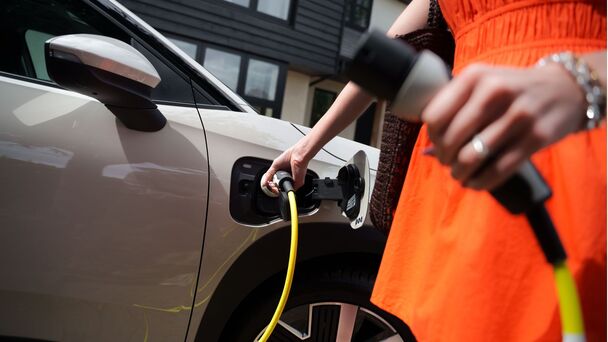
For drivers with access to off-street parking, home charging is often one of the most convenient ways to own an electric car. Rather than making a separate trip to refuel, you can simply plug in when you get home and let your vehicle charge while you sleep.
A dedicated home EV charger can also provide access to useful features such as scheduled charging and smart charging, making it easier to take advantage of cheaper off-peak electricity tariffs.
Home charging may be a good fit for you if you:
- Have a driveway or garage
- Regularly park at home overnight
- Want the convenience of starting each day with more range
- Want to make the most of off-peak electricity tariffs
- Prefer to rely less on public charging
For many drivers, home charging offers a simple, convenient, and often cost-effective way to keep an electric car topped up and ready for everyday journeys. You can learn more about home charging and the different charging options available in our Guide to going electric blog.
Of course, not everyone has access to a driveway or private parking space. If that sounds like you, it is worth exploring the on-street and public charging options available near your home before choosing your next electric car.
With the right charging setup, owning an electric vehicle can fit seamlessly into your daily routine.
10. Don’t allow range anxiety to hold you back

Range anxiety is one of the most common concerns for drivers considering the switch to an electric car.
However, one of the most useful questions to ask is not necessarily, "How far can this vehicle travel on a single charge?"
Instead, ask yourself: "How far do I typically drive in a normal day?"
For many drivers, daily mileage is comfortably within the range of a modern electric vehicle. If you can charge regularly at home, work, or nearby public charging locations, you may rarely need to think about your vehicle's maximum range at all.
Longer journeys may require a little more planning, but the UK's public charging network continues to expand, making electric travel more accessible and convenient than ever.
As of August 2026, according to ZapMap , there were 123,677 EV charging connectors across 96,708 devices at 47,810 locations throughout the UK, supporting on-street, destination and en-route charging.
For most drivers, confidence with electric vehicle ownership comes from understanding what their vehicle can do and developing a charging routine that fits their lifestyle.
Once you have lived with an electric car for a while, charging often becomes just another part of your routine, and range anxiety can quickly become a thing of the past.
EV charging tips at a glance
| If you want to... | Try this |
| Reduce charging costs | Charge at home and take advantage of off-peak EV electricity tariffs where available |
| Support battery health | Follow your manufacturer's charging guidance and avoid unnecessary charging extremes |
| Make long journeys easier | Plan rapid or ultra-rapid charging stops before setting off |
| Improve winter efficiency | Pre-condition your vehicle while it is plugged in |
| Get more from your range | Make use of regenerative braking and drive smoothly where possible |
| Make everyday charging easier | Top up little and often rather than waiting until the battery is almost empty |
| Spend less time charging on the road | Understand your EV's maximum charging speed and choose suitable chargers |
Final thoughts

Charging an electric vehicle does not need to be complicated. For most drivers, the biggest adjustment is simply getting used to a different way of refuelling.
Rather than waiting until your vehicle is running low and making a dedicated trip to a petrol station, EV ownership is often about charging while your car would be parked anyway, whether that's at home overnight, at work, or while you're out and about.
Charge at home when you can, take advantage of cheaper electricity where possible, learn what works best for your vehicle, and use rapid charging when you need it on longer journeys. Before long, plugging in simply becomes another part of your everyday routine.
And with more than 122,000 public EV chargers now available across the UK, alongside increasing vehicle ranges and faster charging technology, electric driving is becoming more convenient and accessible than ever before.
Whether you are considering your first electric vehicle or have already made the switch, understanding the basics of charging can help you get the most from your EV and enjoy confident, stress-free electric motoring.
Enquire about our electric range
Discover the Škoda electric range at Mon Motors Škoda. From the Epiq to the Elroq, our expert team is here to answer your questions, talk you through your options and help you find the right electric Škoda for you.
Enquire today or visit Mon Motors Škoda in Bristol, Gloucester, or Weston-super-Mare to learn more about our electric range and the benefits of making the switch to electric.
Frequently Asked Questions
How often should I charge my electric car?
There is no set rule for how often you need to charge an electric vehicle. It depends on factors such as your mileage, battery size, and access to charging.
Many drivers simply top up their battery whenever it is convenient rather than waiting until it is almost empty. If you mainly make shorter journeys, you may find that charging a few times a week is more than enough to meet your needs.
Should I charge my electric car to 100% every night?
You do not usually need to charge an electric vehicle to 100% every night.
For day-to-day driving, many drivers choose a lower charging limit and only charge to 100% when they need the additional range. Recommendations can vary between manufacturers and battery types, so it is always best to follow the guidance provided for your specific vehicle.
Is it cheaper to charge an electric car at home or at a public charger?
For drivers who have access to it, home charging is generally the most cost-effective option.
The Energy Saving Trust states that charging at home is typically the cheapest way to charge an electric vehicle, with further savings potentially available through EV-specific and time-of-use electricity tariffs.
Public rapid and ultra-rapid charging is usually more expensive, reflecting the convenience of much faster charging speeds.
Why does my electric car charge more slowly after 80%?
Charging speed is not constant throughout an EV charging session. As the battery reaches a higher state of charge, the vehicle may reduce the amount of power it accepts. This helps manage battery temperature and support long-term battery health.
This is one reason why, on longer journeys, it can sometimes be quicker to charge to the level you need and continue your journey rather than waiting for the battery to reach 100%.
What is the difference between rapid and ultra-rapid EV charging?
Under the UK charging power bands introduced in 2026, rapid chargers provide between 50kW and 149kW, while ultra-rapid chargers deliver 150kW or more.
Both are particularly useful on longer journeys when you want to add range as quickly as possible.
Your actual charging speed will still depend on factors such as your vehicle's charging capability, battery level, battery temperature, and charging conditions.
Do I need lots of different apps to charge an electric car in the UK?
Not necessarily. Charging apps can be us eful for finding chargers, checking availability, viewing pricing information, and managing charging sessions.
However, many public chargers now allow contactless payment, meaning an app or account is not always required.
It is still worth having a charging or route-planning app available when travelling further afield, as it can help you locate suitable chargers and identify alternative charging options if needed.
Can you own an electric car without a home charger?
Yes. A home charger can make electric vehicle ownership particularly convenient, but it is not essential. Drivers without off-street parking can use public, destination, workplace, and on-street charging instead.
Before choosing an electric vehicle, it is worth looking at the charging options available near your home, workplace, and the places you visit regularly. This will give you a clearer idea of how easily an EV could fit into your lifestyle and driving routine.